Login/Create Account


Marriage Customs in Germany: Diverse Traditions Between Modernity and Preserving Roots
Germany is one of those countries where long-standing traditions and modern lifestyles coexist in everyday social life. Marriage is at the very top of the occasions that Germans attach great importance to.
Although customs vary from region to region and from one federal state to another, there is a set of rituals and stages that can be considered part of a shared German wedding culture.
Official engagement: The beginning of the road to marriage
Relationships between partners usually start informally and may last for years before they decide to get engaged. Engagement in Germany is generally not associated with big parties or elaborate displays. It is often a private moment between the two people, and any celebration may be limited to a small gathering with family and friends.
Traditionally, an engagement ring (Verlobungsring) is given and is most often worn on the left hand.
Civil marriage (Standesamt): The essential legal step
In Germany, a marriage is only legally recognised after a civil wedding ceremony at the Standesamt (civil registry office). Even if the couple later holds a religious or large festive ceremony, the legally binding marriage must first be concluded in front of an official registrar at the municipality.
A date has to be booked in advance, and documents such as passports or ID cards, birth certificates and proof of residence (Meldebescheinigung) must be submitted.
The civil ceremony is usually simple but stylish. The couple can choose music, bring a photographer and invite close relatives or friends. Fees vary from state to state but typically range between about 50 and 150 euros.
Religious wedding: Between tradition and faith
After the civil ceremony, many couples choose to have a religious wedding, especially in Catholic or Protestant regions. The ceremony is led by a pastor or priest and takes place in a church decorated with flowers and accompanied by classical or organ music.
The religious ceremony is not legally required, but it carries strong spiritual and emotional meaning for many couples.
Pre-wedding customs: The Polterabend
One of the traditional customs that is still very much alive in Germany is the Polterabend, an informal gathering usually held on the evening before the wedding.
Family, friends and neighbours come together and smash plates and ceramic items (but not glass!) in front of the couple’s home. This is believed to drive away evil spirits and bring good luck.
The couple then has to clean up the broken pieces together – a symbolic act of cooperation, mutual support and shared responsibility.
The wedding day: Simplicity and German organisation
Wedding celebrations in Germany are generally not overly glamorous or extravagant. They are rather characterised by good organisation, clear structure and attention to detail.
Festivities usually start in the afternoon and continue until midnight or later. There is often a detailed programme including welcome speeches, food service, musical interludes, dancing and sometimes humorous sketches or artistic performances by friends.
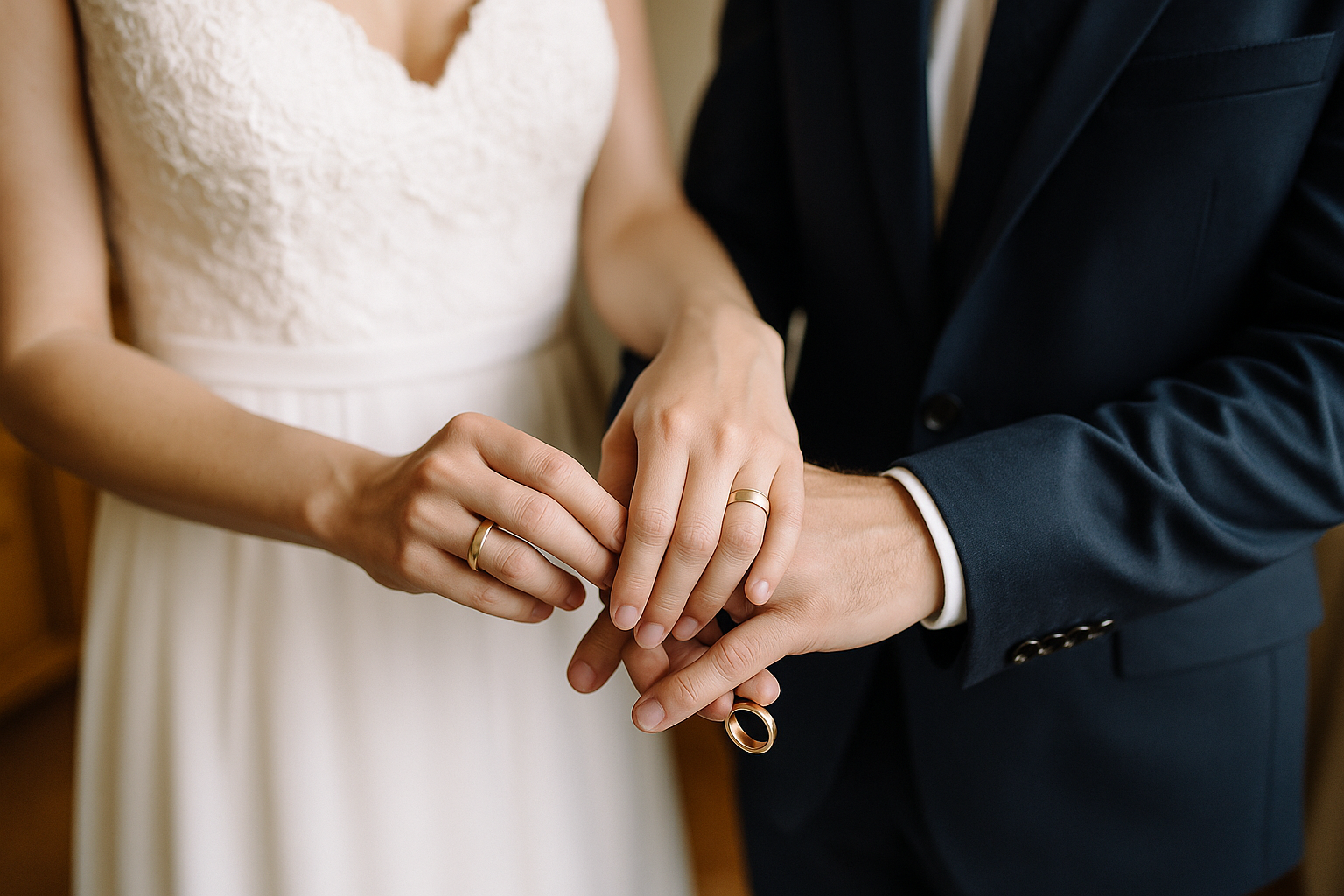
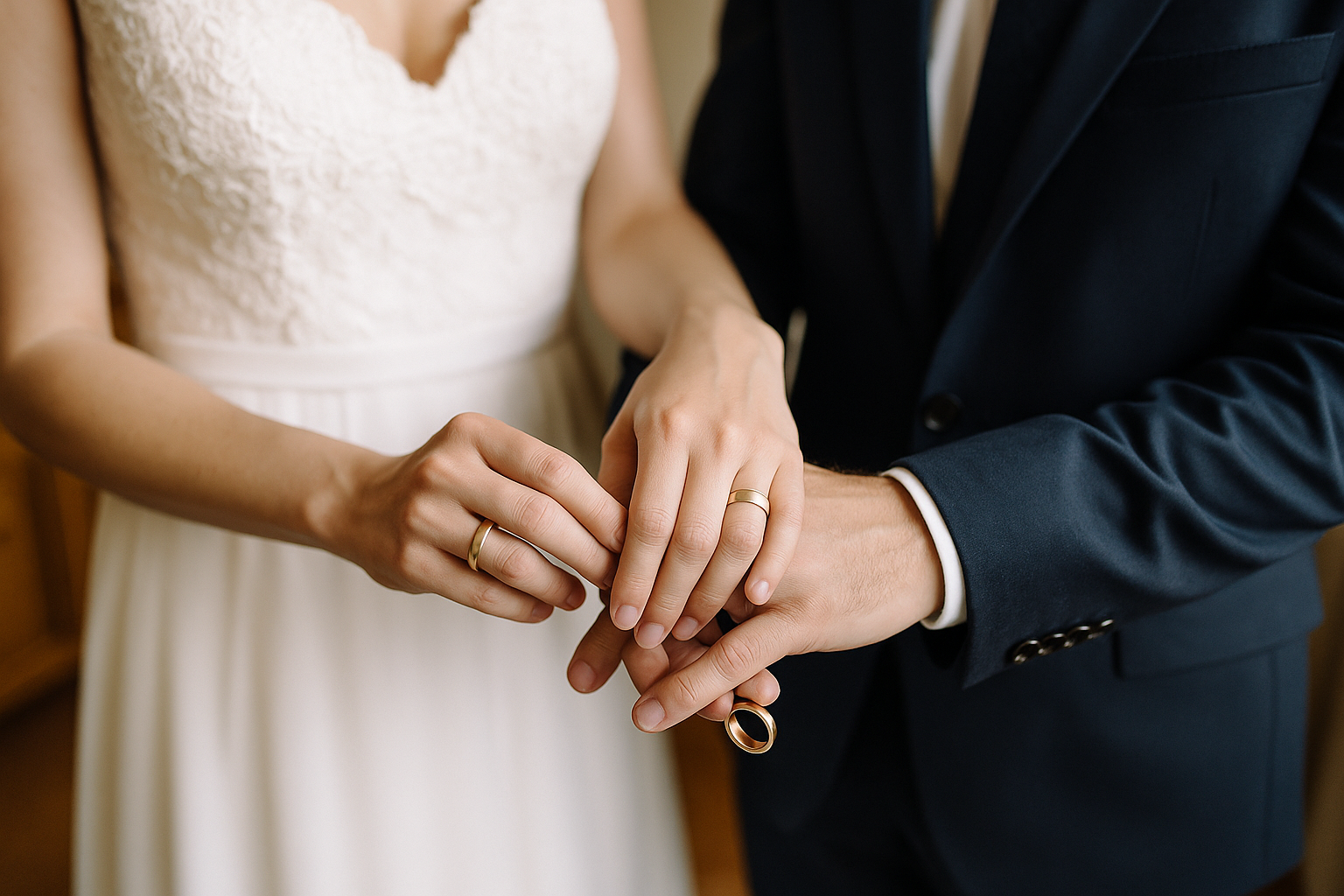
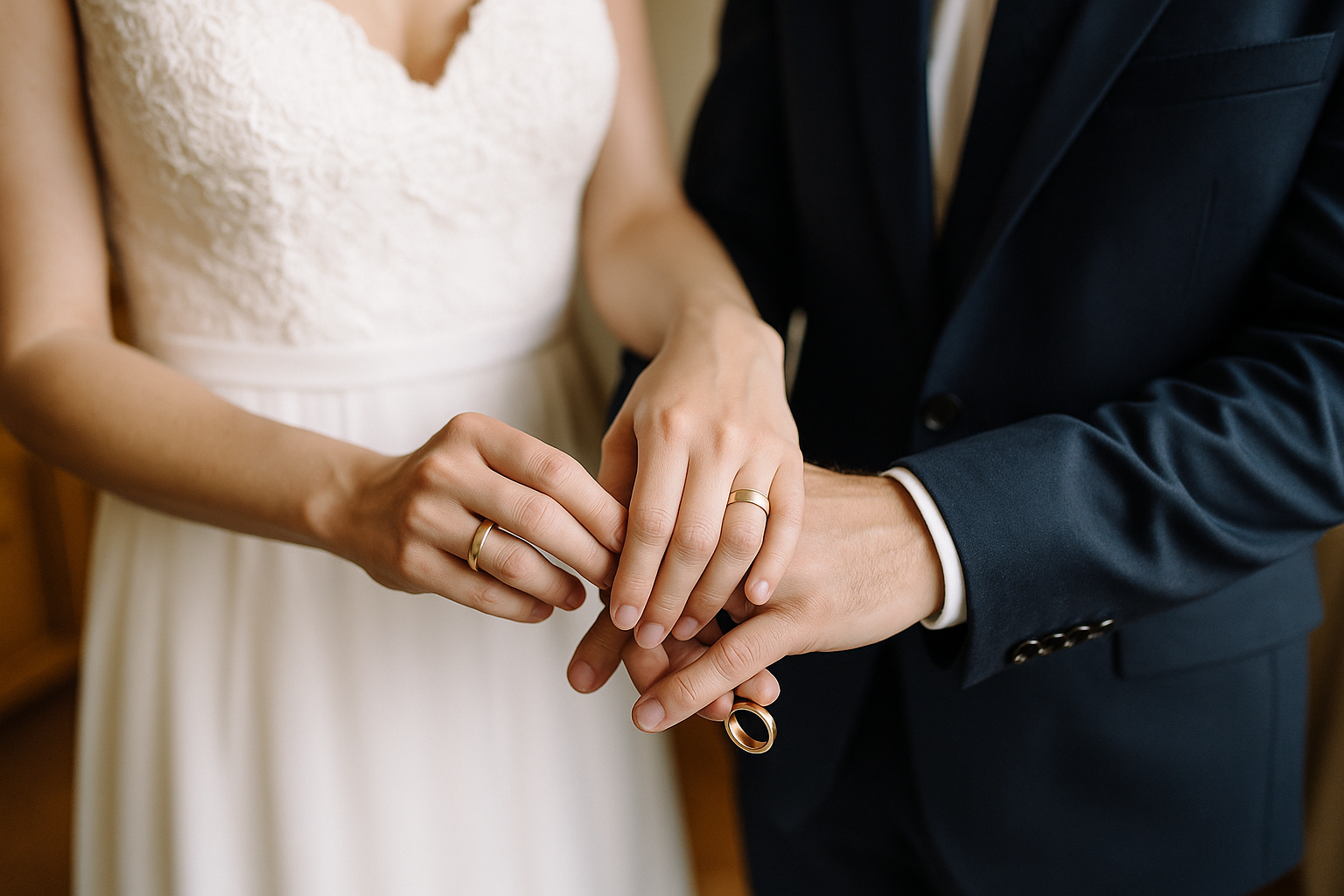
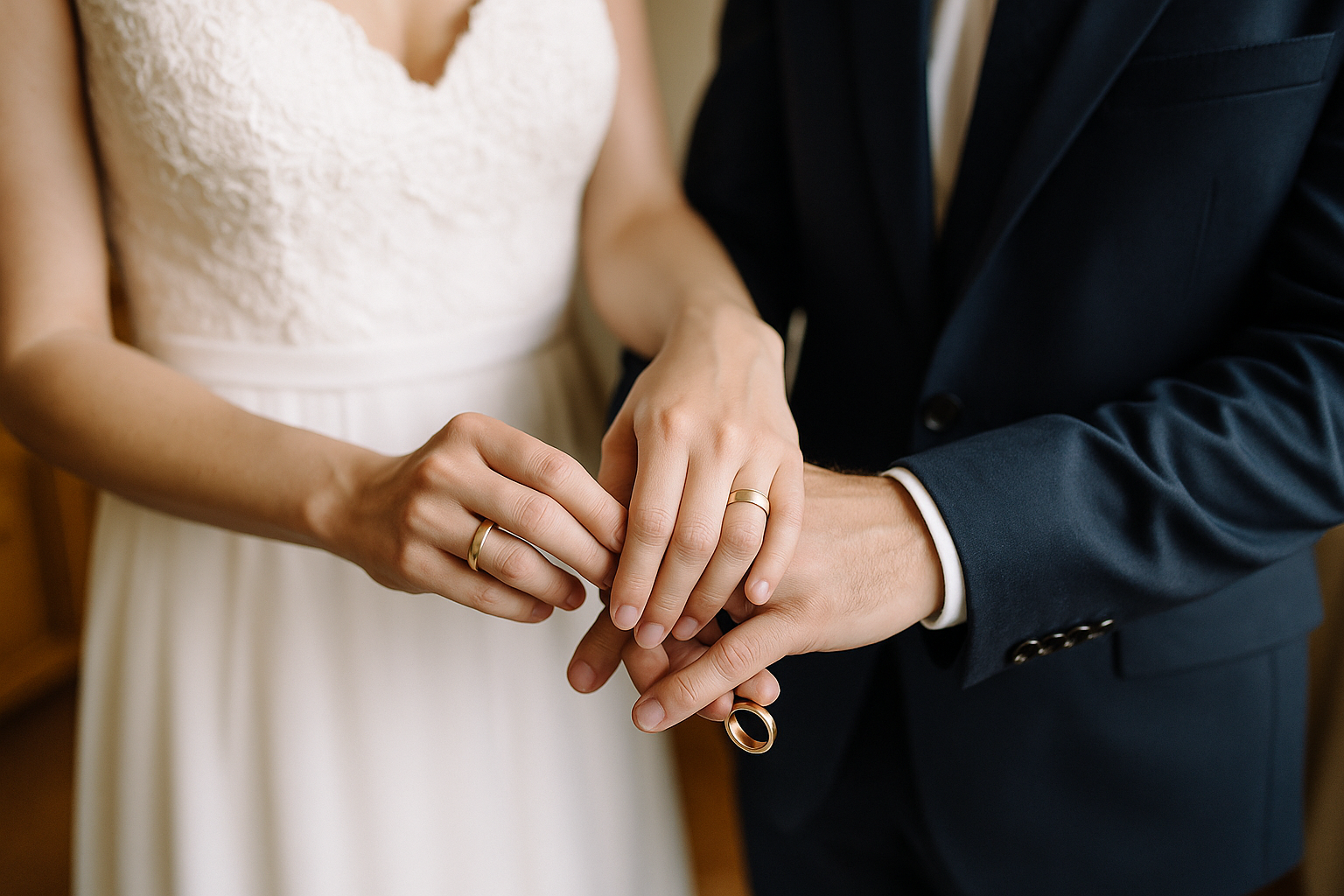
The bride typically wears a classic white wedding dress, while the groom appears in a smart suit. The exchange of rings usually takes place during the wedding ceremony, not at the time of engagement. The wedding ring (Ehering) is traditionally worn on the right hand.
Special traditions and humorous moments
In some regions, a typical custom is Baumstammsägen, where the bride and groom together saw through a tree trunk with a large hand saw. This symbolises teamwork and the couple’s ability to face future challenges together.
Another widespread custom is Brautentführung – the “kidnapping of the bride”. Friends secretly take the bride to a nearby bar or pub during the celebration, and the groom has to search for her. When he finds her, he is usually expected to pay for the drinks. This makes for a light-hearted and entertaining break in the festivities.
Mixed marriages: When East meets West
Given the diversity of German society and the large number of people with migrant backgrounds, culturally mixed weddings have become increasingly common.
At such celebrations, German elements are combined with Arab, Turkish or other Eastern traditions. The result is often a particularly rich and vibrant event that reflects the dual identity of the bride and groom.
After the wedding: Name change and legal steps
After marriage, one spouse may take the other’s family name, or both may keep their own surnames. The decision is recorded officially at the municipality.
Subsequently, documents such as ID cards, health insurance cards and driving licences need to be updated.
Married couples also enjoy certain legal advantages, such as joint income tax assessment (tax classes) and family coverage in health insurance schemes.
Important German wedding vocabulary
-
Verlobung – engagement
-
Standesamt – civil registry office
-
Trauung – wedding ceremony
-
Ehering – wedding ring
-
Polterabend – pre-wedding “smashing plates” party
-
Baumstammsägen – sawing a tree trunk
-
Brautentführung – “kidnapping” the bride
-
Hochzeit – wedding celebration
Summary
Marriage in Germany presents a unique blend of modernity and tradition:
The legal framework – especially the civil ceremony – is given top priority, while cultural customs before and after the wedding remain strongly present.
Whether you are a new resident in Germany, a foreign partner of a German citizen, or simply someone interested in German society, understanding these customs offers valuable insight into the country’s diverse everyday culture.
The editorial team of this website strives to provide accurate information based on careful research and multiple sources. Nevertheless, errors or legal changes may occur. Please treat this text as an initial guide only and always consult the relevant authorities or qualified professionals for binding and up-to-date information.