Login/Create Account


Traditional Wedding in Bavaria (Bayerische Hochzeit): Rituals that Unite Faith and Folk Celebration
The federal state of Bavaria, in southern Germany, is known as one of the regions most strongly attached to its customs and traditions, both in everyday life and on special occasions. The traditional Bavarian wedding (Bayerische Hochzeit) stands out as one of the most vivid cultural expressions in the region.
Many people – especially in rural areas – still celebrate their weddings according to customs that go back decades, or even centuries, although these are now often mixed with subtle modern influences.
What makes a Bavarian wedding special?
The traditional wedding in Bavaria is first and foremost a community celebration. It goes far beyond the idea of a union between two individuals and becomes an event in which the neighbourhood, friends, relatives and, in some cases, almost the entire village take part.
Traditional clothing, folk music, regional food and Catholic rituals all play a central role in this special day.
Traditional clothing: Dirndl and Lederhose
One of the most visible symbols of a Bavarian wedding is the wearing of regional traditional dress.
-
The bride usually wears a Dirndl – a classic Bavarian dress with a fitted bodice and a wide, swinging skirt, often decorated with lace or hand-embroidered floral patterns.
-
The groom typically appears in Lederhose, short or knee-length leather trousers, combined with a cotton or linen shirt and often a traditional waistcoat and short jacket (Janker).
Many guests – especially relatives and local villagers – also wear traditional clothing, which gives the celebration a truly authentic, folkloric atmosphere.
Church wedding (Kirchliche Trauung): Catholic spirituality
In Bavaria, particularly in rural, predominantly Catholic areas, a marriage is often not considered truly complete without a church wedding.
The ceremony usually takes place in a small village church, modestly but tastefully decorated. It often includes:
-
Prayers and intercessions
-
Readings from the Bible and a sermon by the priest
-
Religious hymns or songs by a choir
-
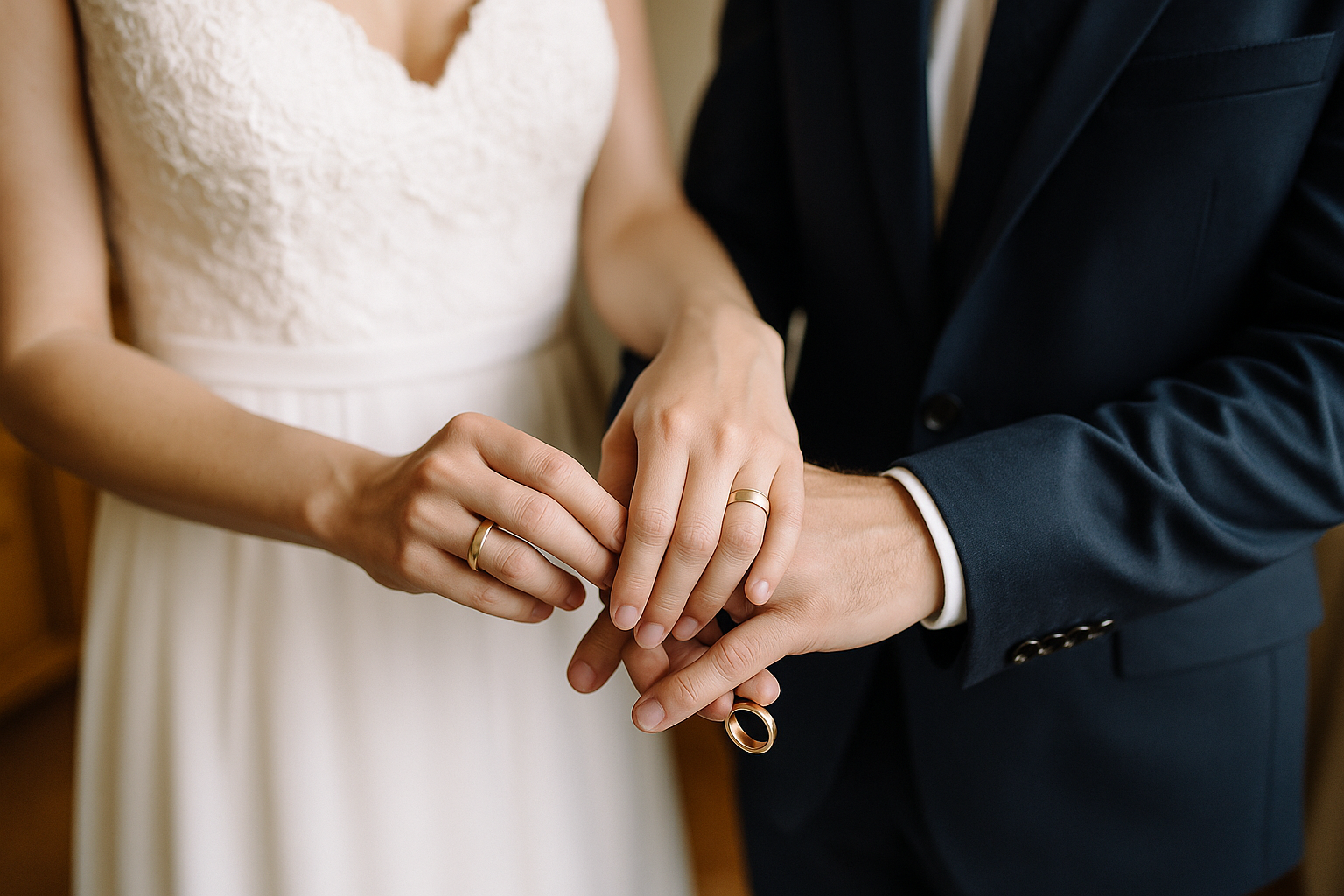
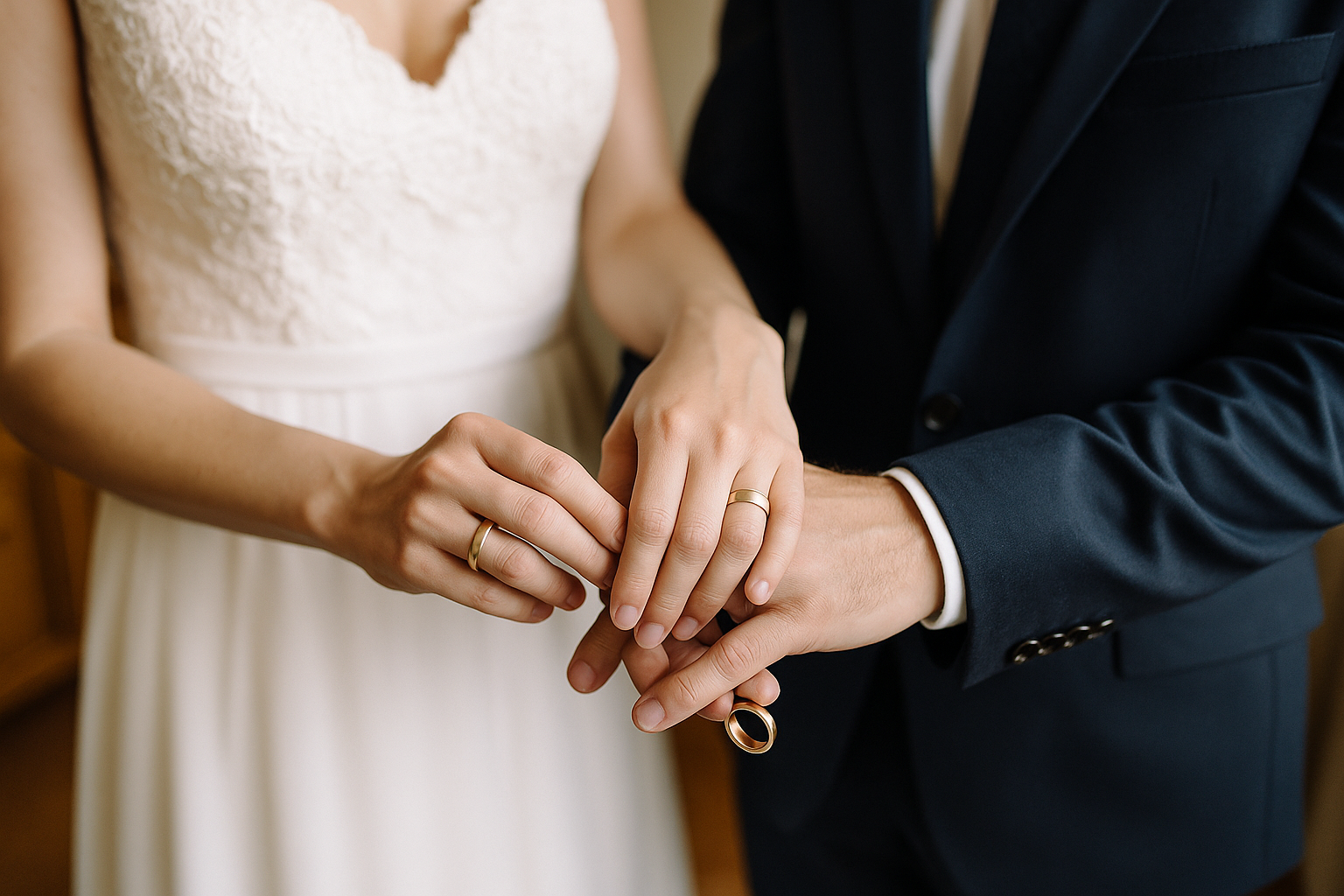
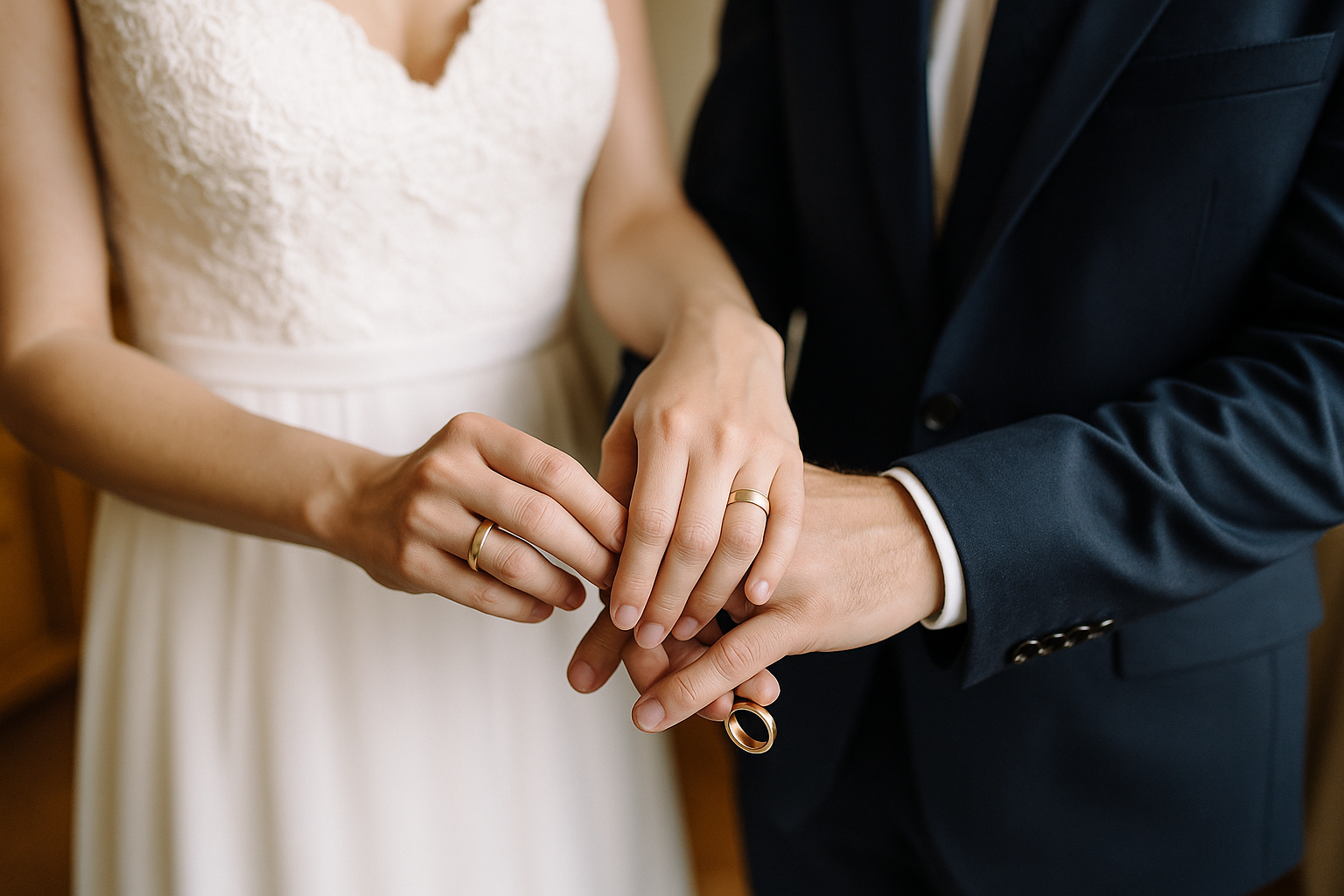
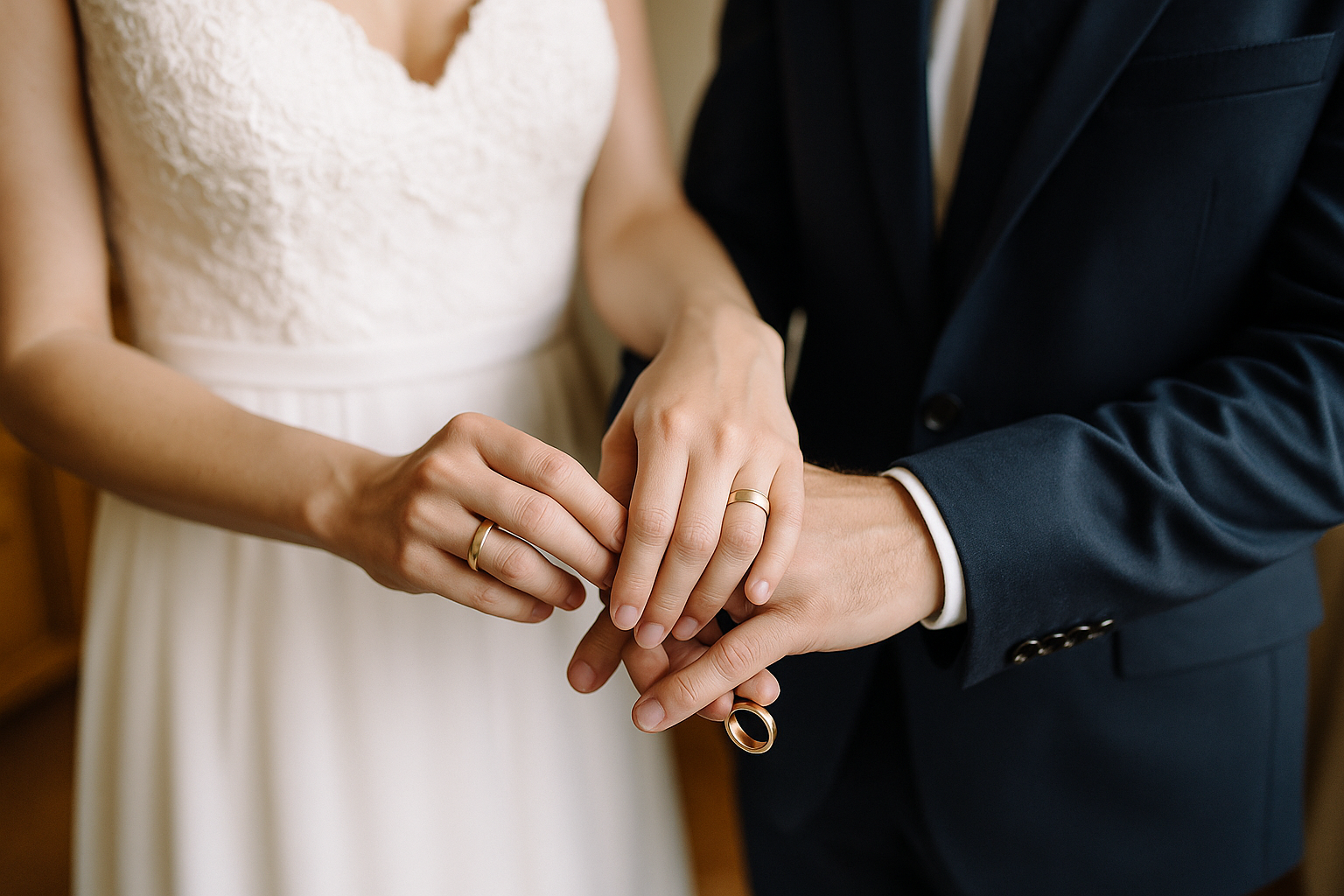
The solemn exchange of rings and a blessing for the couple
The ceremony may be accompanied by classical organ music or by a local choir or music group. The presence of the local priest (Pfarrer) is regarded as an expression of respect and attachment to tradition.
The wedding procession (Hochzeitszug): From church to venue
After the church ceremony, the Hochzeitszug (wedding procession) sets off – one of the most characteristic elements of a Bavarian wedding.
-
The bride and groom lead the procession.
-
They are followed by family and guests, walking on foot or riding in decorated vehicles, sometimes even in flower-adorned horse-drawn carriages.
A traditional brass band (Blaskapelle) often accompanies the procession, playing Bavarian tunes. This turns the way from the church to the hall or inn into something resembling a small local festival.
The celebration: Folk songs, dancing and abundant food
Music and dance
It is rare to find a Bavarian wedding without live music. In many cases, a band or brass ensemble provides entertainment with:
-
Volksmusik (folk music)
-
Schlager (popular German hits)
-
Traditional dance tunes
A particularly iconic element is the Schuhplattler, a Bavarian folk dance in which the dancers clap their hands on their thighs, shoes and sometimes the floor. It creates a lively atmosphere and expresses the close connection to regional culture.
Food and drink
Bavarian weddings are known for hearty regional dishes, such as:
-
Schweinshaxe (roasted pork knuckle)
-
Knödel (bread or potato dumplings)
-
Weißwurst (traditional white sausages)
-
Brezen (pretzels)
All of this is typically served alongside Bavarian beer, poured into large mugs and considered an essential part of the celebration.
Games, surprises and traditional interludes
A traditional Bavarian wedding usually includes a variety of entertaining performances and games, often organised by friends or relatives, for example:
-
Humorous sketches or small plays about the couple
-
Quizzes and games to test how well the bride and groom know each other
-
Symbolic tasks such as Baumstammsägen – sawing through a log using a two-person handsaw, representing the effort and cooperation needed in marital life
Wedding gifts (Hochzeitsgeschenke) and local customs
Gifts are often given in the form of money envelopes (Geldgeschenke), but usually in humorous and creative ways, such as:
-
Hiding money inside a cake
-
Freezing it into a block of ice
-
Concealing coins in containers filled with rice, sand, or similar
This turns the act of opening presents into an entertaining part of the celebration.
Another well-known custom is Brautstehlen – the “stealing of the bride”:
-
Friends or acquaintances secretly take the bride away to another location, often a pub or small inn.
-
The groom has to search for her.
-
Once he finds her, he is commonly expected to pay the bill or buy a round of drinks to “win her back”, all in a cheerful and light-hearted atmosphere.
The day after: Katerfrühstück
On the morning after the big celebration, close friends and family often gather again for a Katerfrühstück – literally a “hangover breakfast”.
This usually includes:
-
Light dishes or leftovers from the wedding feast
-
Lively conversations and laughter about the events of the previous day
-
Shared memories of funny or emotional moments from the wedding
This tradition extends the wedding celebration and expresses additional appreciation for the guests and the sense of community.
Important Bavarian terms:
-
Dirndl – traditional Bavarian women’s dress
-
Lederhose – traditional leather trousers for men
-
Kirchliche Trauung – church wedding ceremony
-
Hochzeitszug – wedding procession
-
Schuhplattler – Bavarian folk dance with clapping and stomping
-
Blaskapelle – traditional brass band
-
Baumstammsägen – sawing a tree trunk as a wedding ritual
-
Brautstehlen – “stealing” the bride as a playful custom
-
Katerfrühstück – breakfast on the morning after the wedding
Conclusion:
A traditional wedding in Bavaria is far more than a formal ceremony. It is a vibrant folk celebration that unites religious traditions, local folklore and the famous Bavarian hospitality.
It reflects a deep sense of belonging to community and region and remains a lasting cultural experience for everyone involved – whether locals or visitors.
The editorial team of this website strives to provide accurate information based on thorough research and multiple sources. Nevertheless, errors or uncertainties may occur. Please treat the contents of this article as an initial point of reference and always consult the competent authorities or professionals for binding and up-to-date information.