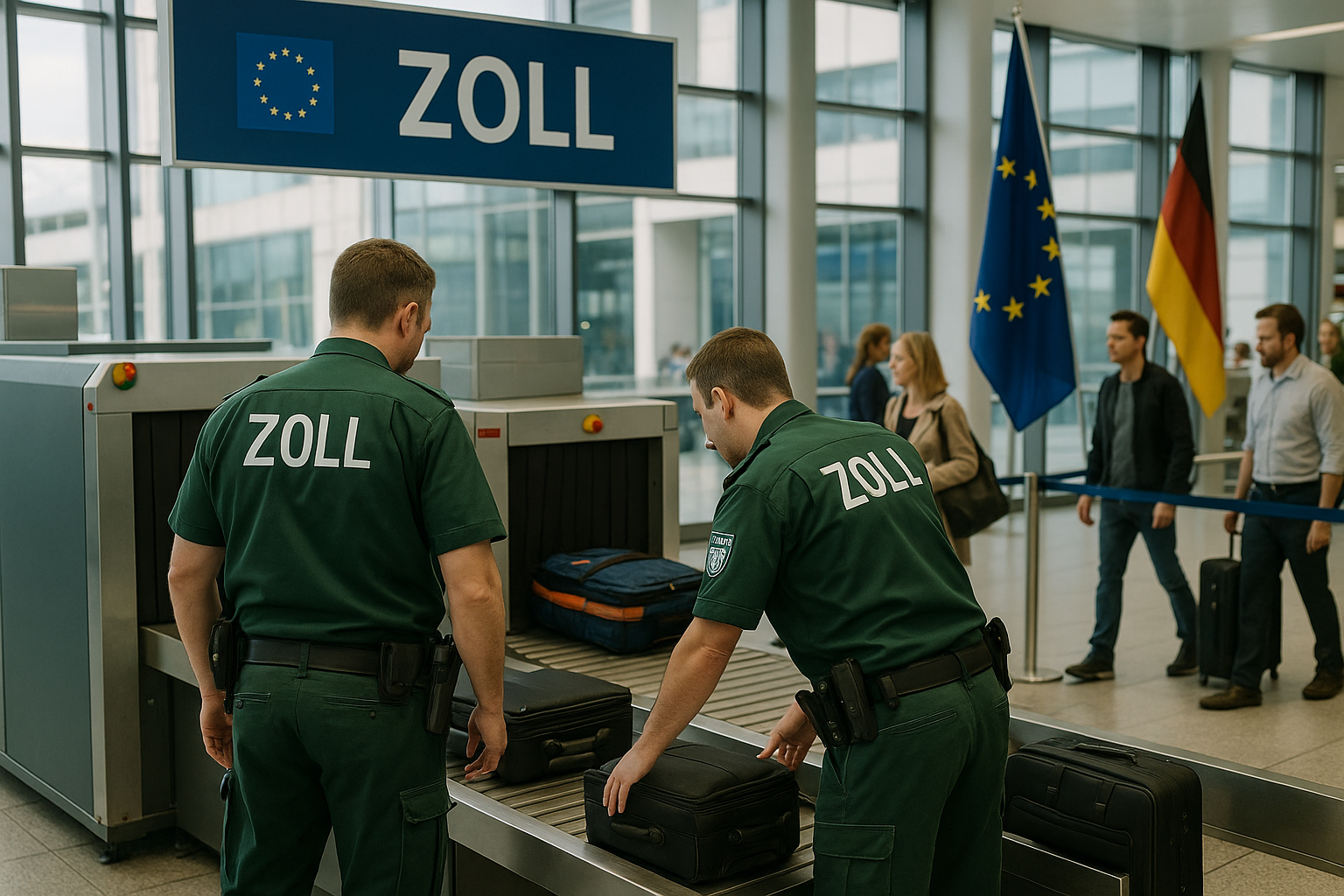
Bringing meat and dairy products into Germany: “Veterinärbescheinigung” rules for travellers
When entering Germany, the import of foodstuffs of animal origin – such as meat, cheese, milk, butter and yoghurt – is subject to very strict rules based on EU veterinary legislation. These rules aim to prevent the introduction of serious animal diseases such as foot-and-mouth disease or avian influenza. They are enforced particularly strictly for travellers arriving from non-EU countries (“third countries”).
For travellers coming from outside the European Union, the basic rule is:
Bringing any meat or dairy products into Germany is prohibited, unless you carry an official veterinary certificate known as:
Veterinärbescheinigung – official veterinary health certificate
As a general rule, the following products may not be brought in:
Meat in all forms (cooked, dried, canned, raw)
Sausages and processed meat (e.g. Wurst, salami)
Dairy products (milk, cheese, yoghurt, butter)
Foods containing ingredients of meat or milk
(such as ready-made meals or sauces containing cream or meat)
The ban covers even the smallest amounts, for example:
a sandwich with cheese or cold cuts,
a small piece of cheese, or a yoghurt pot in your hand luggage,
if you do not have an officially recognised veterinary certificate issued by the authorities in the country of departure.
There are only a few, very narrow exceptions where animal products may be brought in:
| Situation | Details |
|---|---|
| Animal products from Andorra, Switzerland, Norway, Iceland, San Marino | Allowed in personal quantities |
| Baby formula / infant milk in sealed retail packages | Allowed up to 2 kg, provided no refrigeration is required |
| Pet food for medical purposes | Up to 2 kg, with medical justification (e.g. prescription) |
| Fish | Up to 20 kg or one whole fish |
| Chocolate and baked goods (without meat or dairy filling) | Not covered by the ban; allowed in normal personal quantities |
A Veterinärbescheinigung is an official veterinary health certificate issued by the competent veterinary authority in the country of departure. It typically includes:
the type of animal product,
the origin of the animals used,
confirmation that the product is free from certain listed animal diseases,
the signature of an official veterinarian and an official stamp.
The certificate must:
be written in German or English, and
comply with the EU’s standard model certificates.
Without such a certificate, the products you bring will be confiscated at the border. In addition, the authorities may:
impose fines, and/or
open administrative or criminal investigations in certain cases.
If you try to bring meat or dairy products from a non-EU country into Germany without meeting the legal requirements:
the goods will be confiscated immediately at the point of entry,
they will be destroyed at the state’s expense, and you will receive no compensation.
In cases of repeated violations or larger quantities, you may also face:
substantial fines,
administrative or legal proceedings,
in serious cases, criminal charges for endangering animal or public health.
Yes.
Sending meat or dairy products by post or parcel from outside the EU to Germany is subject to the same strict rules.
Without official veterinary documentation:
such consignments are not allowed to enter Germany, and
the contents may be seized and destroyed by customs and veterinary authorities.
| Product | Allowed? | Conditions |
|---|---|---|
| Cooked or raw meat | ❌ No | – |
| Cheese, yoghurt, butter | ❌ No | – |
| Infant formula / baby milk | ✅ Yes | Up to 2 kg, sealed, no refrigeration required |
| Fish | ✅ Yes | Up to 20 kg or one whole fish |
| Chocolate | ✅ Yes | Only if no meat or dairy filling is present |
| Pet food (medical diet) | ✅ Yes | Up to 2 kg with prescription or medical proof |
If you plan to bring food with you when travelling to Germany, it is safest to limit yourself to:
plant-based products, and
long-life foods that do not contain meat or dairy ingredients.
If you are unsure, you should:
ask customs officers directly at the airport, or
submit an enquiry in advance via the official German customs website.
The editorial team strives to provide accurate and up-to-date information based on thorough research and multiple sources. Nevertheless, errors or incomplete details cannot be entirely ruled out. Therefore, this article should be regarded only as an initial, non-binding guide. For legally binding and current information, always contact the competent customs and veterinary authorities.