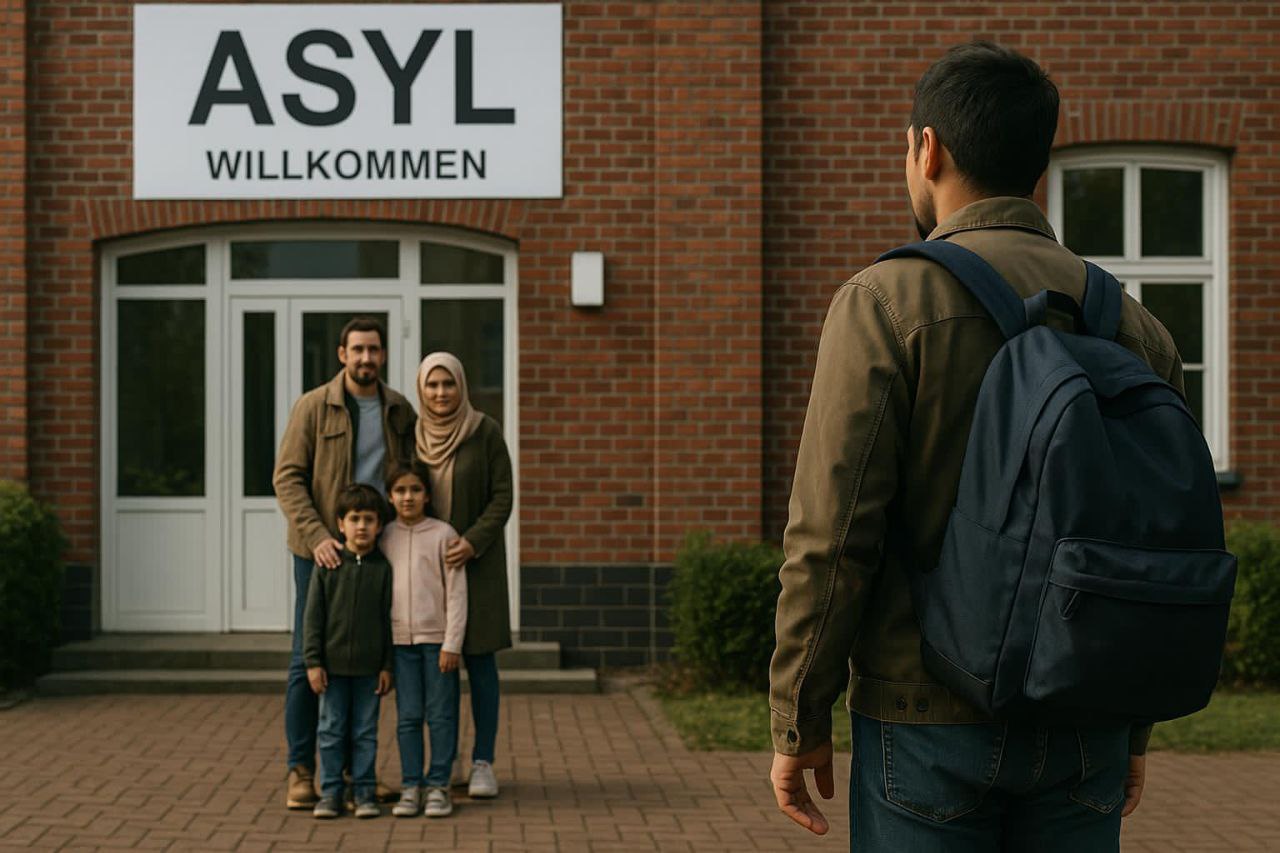
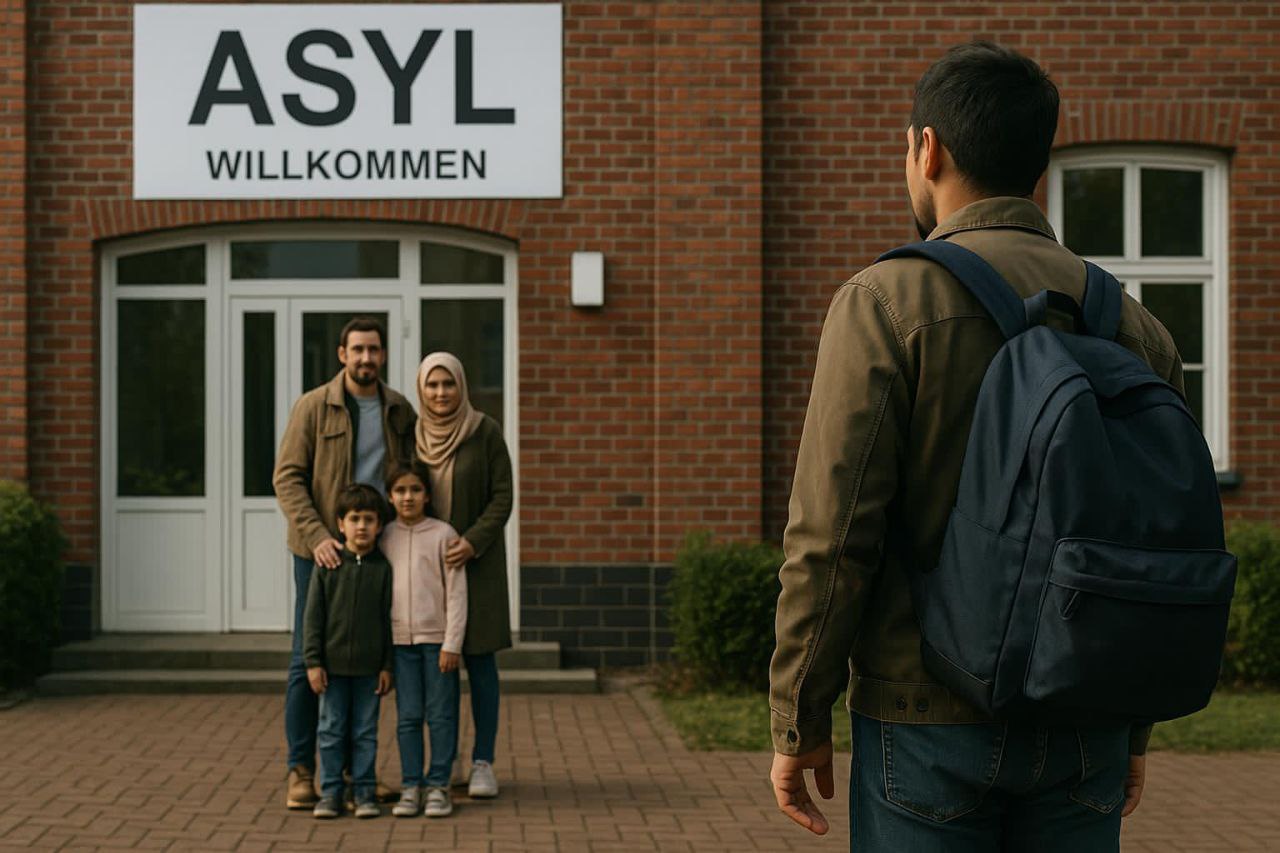
Comprehensive comparison of the asylum track in Germany and Sweden
(Application & procedure │ financial support │ work │ family reunification │ permanent residence & citizenship)
| Germany | Sweden | Field |
|---|---|---|
| At an ANKER centre within 48 hours, then the application is forwarded to BAMF. The average first-instance decision time in 2024 was 8.7 months, the longest since 2017 (tagesschau.de). | Application lodged with border police or the nearest Migrationsverket office. By law, the agency must decide within 6 months; in practice, most cases are decided within 5.5 to 6.5 months (Asylinfo-Datenbank). | Registration / lodging the claim |
| €441 per month per person from 1 January 2025 (partly paid in kind in some federal states) (InfoMigrants). | Daily allowance: 24 SEK if food is provided, or 71 SEK if the applicant cooks for themselves (≈ €64 or €189 per month) (Migrationsverket). | Asylum-seeker allowance |
| A work ban for three months outside reception centres and six months for those who remain inside; since February 2024, people who have spent 6 months in a centre can obtain a work permit (Bundesregierung). | Migrationsverket can grant an “AT-UND” exemption on the LMA card immediately upon application, if the asylum seeker has clear identity documents and cooperates with the authorities; this means it is possible to work from the very first days (Migrationsverket). | Right to work during the procedure |
| Three-year residence permit, renewable, with full access to the labour market and public health insurance. | Temporary permits: 3 years for refugees and 13 months for subsidiary protection, then renewed in 2-year periods following each review (Asylinfo-Datenbank). | Residence card after recognition |
| Refugee status: spouse/minor children without income requirement if the application is submitted within 3 months. Subsidiary protection is subject to a cap of 1,000 visas per month (Migrationsverket). | If the application is submitted within 3 months of being granted protection, both refugees and subsidiary protection holders are eligible. However, the person living in Sweden must meet income and housing requirements before the family arrives (Migrationsverket, Migrationsverket). | Family reunification |
| After 5 years plus B1 language level and independent income (InfoMigrants). | Refugees can apply after 3 years of residence if they meet the self-sufficiency and housing criteria; otherwise, after 5 years, as for other residents (Migrant Integration). | Permanent residence |
| Law of 27 June 2024: citizenship after 5 years (or 3 years for exceptionally well-integrated applicants), with dual citizenship allowed (Deutschland.info). | Current rule: 5 years of lawful residence and a clean criminal record. The government proposes increasing this to 8 years, with mandatory language and income tests from 2026 if approved by Parliament (The Times). | Naturalisation |
1 │ Ease of application and processing speed
In Sweden, the practical application step is usually simpler: the claim is lodged in a single place, and the asylum seeker receives their LMA card within hours, with a clear case number from day one.
In Germany, the newcomer may have to move between border police, the ANKER centre, and BAMF before their place of residence is finalised, which makes the initial phase longer and administratively more complex.
Regarding processing time, Sweden has in recent years been faster on average, but the actual gap has narrowed as application numbers have fluctuated and court appeals have increased in both countries, especially in Sweden following stricter asylum laws.
2 │ Financial support and reception conditions
In Germany, asylum seekers receive an amount close to the general social assistance rate for citizens, though part of it may be provided as vouchers or restricted payment cards, depending on the federal state.
In Sweden, support is paid daily onto an electronic card, and the level has been almost unchanged since the 1990s. This reduces purchasing power, especially for those who cook for themselves and have to cover transport, clothing and everyday expenses from this allowance.
3 │ Access to the labour market
In Sweden, the AT-UND endorsement on the LMA card gives asylum seekers a powerful tool: once identity is established and they cooperate with the authorities, they can sign an employment contract even before the main asylum interview.
In Germany, the applicant must first wait for the end of the work ban period (3 months outside, 6 months inside reception centres) and then convince the foreigners’ authority to issue a work permit. As long as they are obliged to live in a reception centre, employment is generally not allowed, which can delay their economic integration despite available jobs.
4 │ Benefits after recognition
Germany generally issues a 3-year residence permit with full access to work and public health insurance, and requires most protection holders to attend a state-funded integration course (around 700 hours of language + 100 hours of civic orientation). After five years, they can apply for permanent residence.
Sweden has, since 2021, moved towards a “temporary permits first” model: refugees receive a 3-year permit and then usually get 2-year renewals, linked to criteria such as employment, language skills and sometimes a civics/values test, making long-term security more dependent on integration into the Swedish labour market.
5 │ Family reunification – where is it more difficult?
In Germany, the numerical cap of 1,000 visas per month significantly extends waiting times for families of those with subsidiary protection, whereas cases involving recognised refugees usually move faster if the application is filed within the three-month window.
Sweden has no formal numerical cap, but it requires the sponsor in Sweden to demonstrate sufficient income and adequate housing for all family members before approval. In practice, this often means meeting a minimum wage-like income level plus rent for accommodation of a specified size, making family reunification difficult for people who rely solely on welfare.
6 │ Pathways to permanent residence and citizenship
In Germany, the 2024 citizenship reform shortened the standard route to 5 years of residence, and even 3 years for those with outstanding integration (e.g. C1 language level and full economic independence), while explicitly allowing dual nationality.
In Sweden, the long-term outlook is less certain: the current standard is 5 years of lawful residence and a clean criminal record, but a draft bill before the Riksdag proposes extending this to 8 years and introducing mandatory language and income tests from 2026. If adopted, this would make the road to citizenship significantly longer and more restrictive.
Conclusion
If you are looking for quick access to the labour market and relatively simple registration procedures, Sweden may appear more attractive.
If you prioritise higher cash benefits, structured integration courses, and a clearly defined path to dual citizenship after five years, Germany offers a more stable package despite slower first-instance decisions.
In both countries, however, the real key to long-term success remains mastering the language and entering the local labour market – they are the decisive factors for sustainable integration.
The editorial team at lak24 strives to provide accurate information through extensive research and consultation of multiple sources. Nonetheless, errors or not-yet-confirmed details may occur. Please treat the information in this article as a first reference and always contact the competent authorities for binding, up-to-date advice.