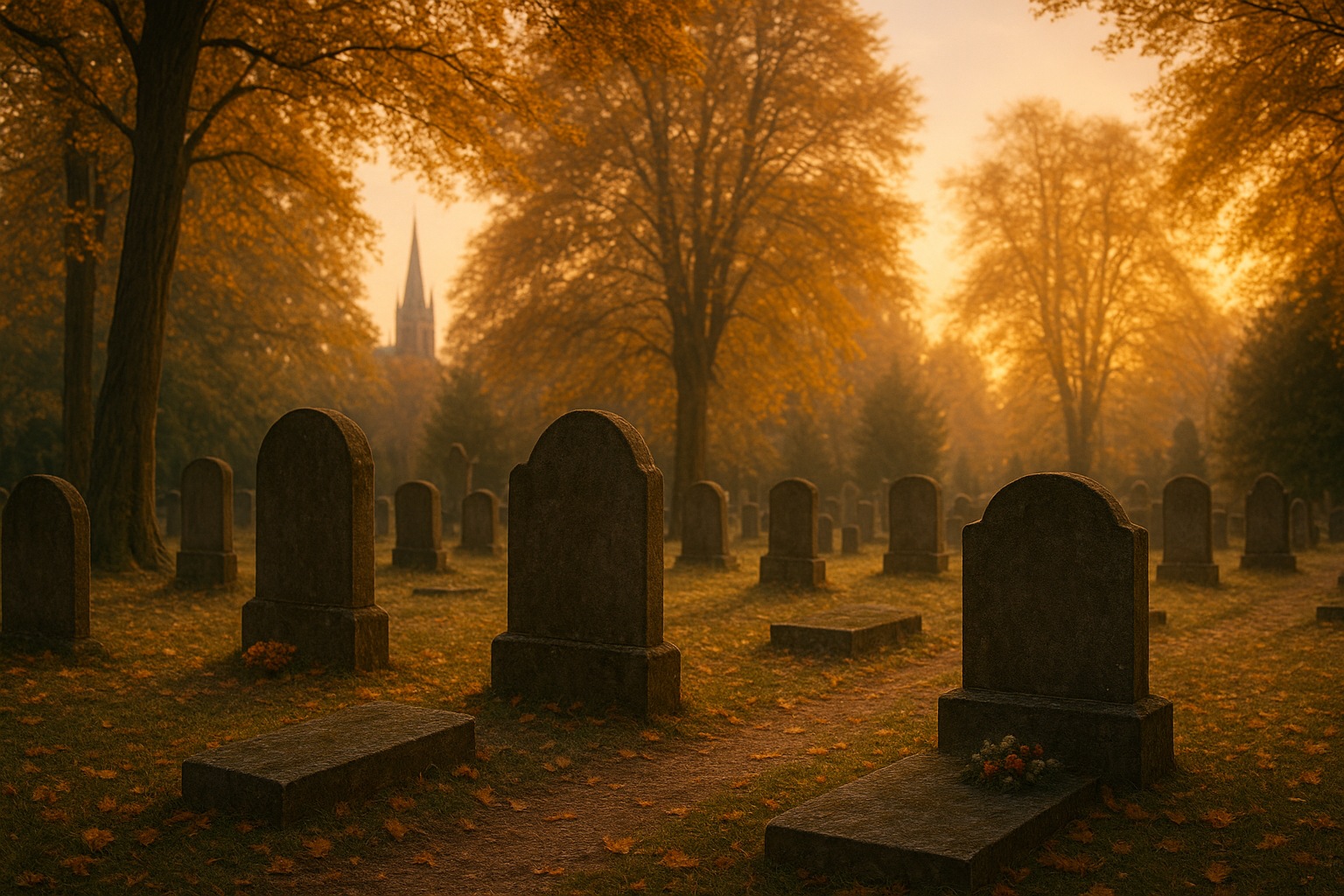
Prohibition of cremation for Muslims in Germany
Legal and religious foundations and the official recognition of Islamic burial
Cremation (Feuerbestattung) is a common form of burial in Germany, especially in the eastern federal states. In Islam, however, this method is strictly rejected: burial in the ground is considered an obligatory duty and may not be replaced by cremation.
With the growing number of Muslims in Germany, the question naturally arises: Is there a legal basis that protects the Muslim’s right to avoid cremation? And are the demands for Islamic burial recognized both religiously and legally?
What is Islam’s position on cremation?
In Islamic law, burning the body of a deceased person is categorically forbidden. This is based on several prophetic traditions (hadith), including:
“Breaking the bone of a dead person is like breaking it while he is alive.”
This indicates that the body of the deceased must be treated with full respect even after death.
Consequently, Muslims are religiously bound to earth burial, typically:
with ritual washing (ghusl),
shrouding in a burial cloth (kafan),
placing the body on the right side,
and performing a proper Islamic funeral ceremony.
Can cremation be legally imposed on a Muslim in Germany?
No. Cremation cannot be forced on a Muslim in Germany. This follows from several legal principles:
1. Constitutional right to freedom of religion (Art. 4 GG)
The German Basic Law guarantees freedom of religion and obliges the state not to compel anyone to act against their faith – including funeral rites and the treatment of the deceased.
2. Respect for the will of the deceased (post-mortem personality right)
The deceased’s will regarding the manner of burial is legally binding as far as possible,
provided it does not clash with mandatory public health or public order regulations.
3. Existence of officially recognized Islamic burial places
In most German federal states, there are now:
dedicated Islamic cemeteries, or
Muslim sections (Muslimisches Grabfeld) within public cemeteries,
where Muslim deceased persons can be buried according to Islamic rites without cremation.
What practical foundations allow Muslims to avoid cremation?
Overview:
| Legal guarantee | Responsible authority |
|---|---|
| Right to a religious burial | Administrative courts (Verwaltungsgericht) in disputes |
| Regulation of religious cemeteries | Municipalities (Kommunen) together with Muslim communities |
| Freedom of religion | German Basic Law (Grundgesetz), Article 4 |
In practical terms:
The family of a deceased Muslim can refuse cremation even if there is no written will, provided the person’s religion can be proven (e.g. through documents, witnesses, membership in a mosque).
It is strongly recommended to prepare a clear written statement (will or burial directive) or to carry a card such as:
“Ich bin Muslim – keine Feuerbestattung.” (“I am Muslim – no cremation.”)
Are there exceptions or challenges?
Yes, difficulties can arise in certain situations, for example when:
there are no relatives to look after the burial,
the deceased left no documents or evidence of religious affiliation.
In such cases, some local authorities may consider cremation, often for cost reasons.
To avoid this, it is advisable to:
record the burial wish in advance in a will or burial directive,
carry a medical or religious emergency card (Notfallkarte) clearly stating that the person is Muslim and wishes an earth burial.
Practical recommendation: wording for a personal directive
Ideally, the following wording should appear in the will or personal emergency directive:
“Ich bin Muslim und wünsche eine Erdbestattung nach islamischem Ritus. Eine Feuerbestattung lehne ich ausdrücklich ab.”
(“I am Muslim and request an earth burial according to Islamic rites. I explicitly reject cremation.”)
This makes the deceased’s wish clear and binding for both authorities and family members as far as the law allows.
Conclusion
Cremation cannot be imposed on Muslims in Germany.
The German constitution, freedom of religion and court rulings require respect for religious burial practices after death.
What matters in practice is:
timely documentation of religious affiliation and burial wishes,
and quick action by the family to arrange transfer of the body to a recognized Islamic cemetery or burial field.
Protecting the dignity of the deceased is both a religious and a legal right that neither families nor public authorities should neglect.
The editorial team of this website strives to provide accurate information based on thorough research and multiple sources. Nevertheless, errors or incomplete details may occur. Please treat this article as an initial point of reference and always contact the competent authorities or qualified legal counsel for binding and up-to-date advice.