Login/Create Account


Residence for professional athletes in Germany (§ 22 (1a) AufenthG)
A legal opportunity for elite athletes to live and work in Germany
Germany is one of the leading destinations worldwide for professional athletes – whether in football, Olympic disciplines, combat sports or other competitive fields. To regulate the stay of such athletes, the German Residence Act (Aufenthaltsgesetz) provides, in § 22 (1a) AufenthG, a possibility to grant a residence permit on the basis of exceptional sporting reasons, provided that certain clear criteria are met.
Below is a precise and comprehensive overview of this residence option – from eligibility requirements to the rights it grants – based on current legal standards and practical experience.
Who is covered by this type of residence permit?
The provision of § 22 (1a) AufenthG is aimed at athletes who:
-
compete at a professional or international level
(top leagues, world championships, national teams, etc.) -
hold a contract with a recognised German club or sports organisation
-
can demonstrate outstanding sporting skills, proven through titles, medals, rankings or previous professional experience at a high level
Difference between § 22 (1a) and § 19c (1) (general employment)
Although the athlete receives financial remuneration, § 22 (1a) is not a standard “work visa”.
Instead, it is a special provision that allows a residence permit to be granted for exceptional reasons in the public interest, such as:
-
strengthening the competitiveness of a league or club
-
promoting top-level sports in Germany
-
providing sporting and social added value for the region or association
In contrast, § 19c (1) AufenthG regulates residence for general employment purposes and is linked more directly to labour-market criteria.
Key requirements for granting a residence permit to professional athletes
-
Formal request from a German club or sports federation
The request should set out:
-
the duration of the contract
-
the reasons why the athlete is needed
-
a plan for integrating the athlete into the team and club structure
-
a commitment regarding living costs and health insurance (salary, housing support, etc.)
-
-
Professional sports CV
A detailed sports curriculum vitae, including:
-
previous clubs and professional stations
-
participation in international competitions
-
national and international achievements, medals or rankings
-
possible call-ups to national teams
-
-
Approval by the relevant authorities
In many cases, the immigration authority will obtain an opinion from the relevant German sports federation, for example:
-
the DFB for football
-
the DOSB for Olympic sports
-
other specialised federations depending on the sport
-
-
Absence of exclusion grounds
The residence permit will normally not be granted if:
-
there are criminal convictions,
-
there are security concerns,
-
or irregularities or fraudulent documents are detected.
-
Does the athlete need a visa beforehand?
Yes.
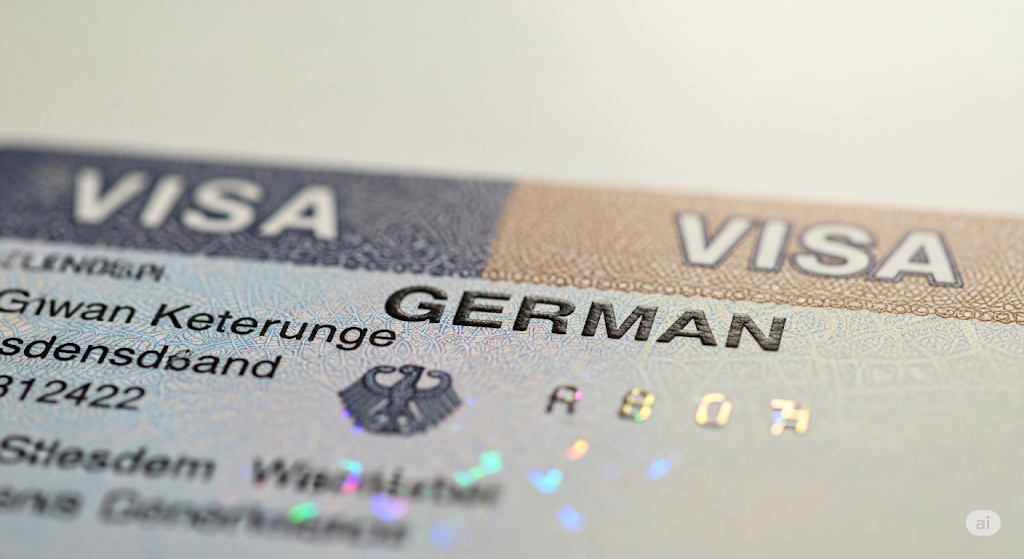
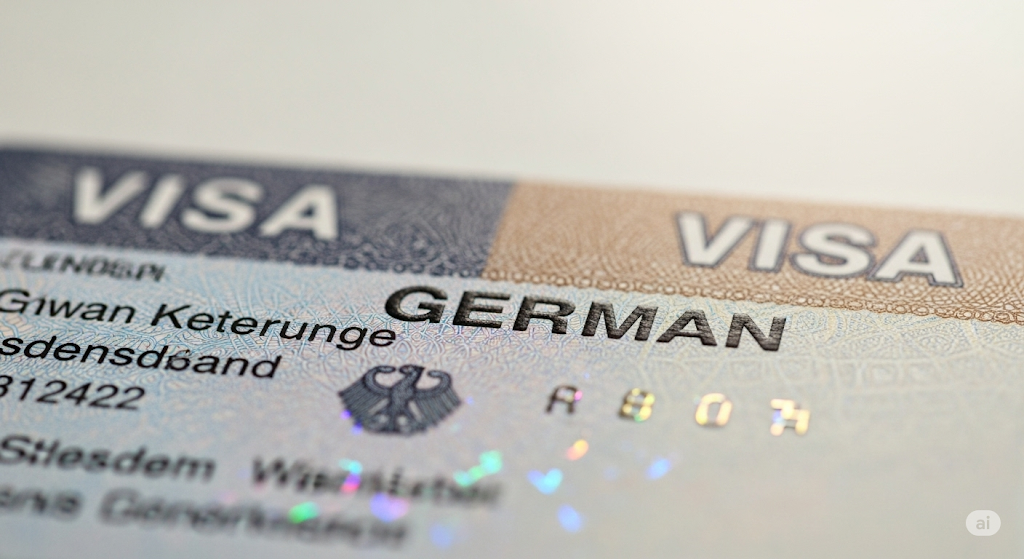
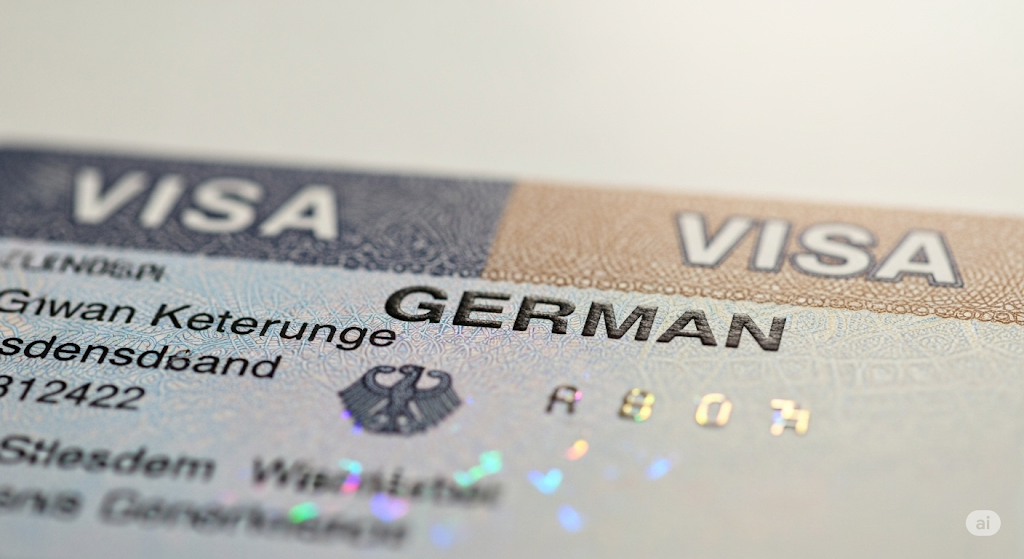
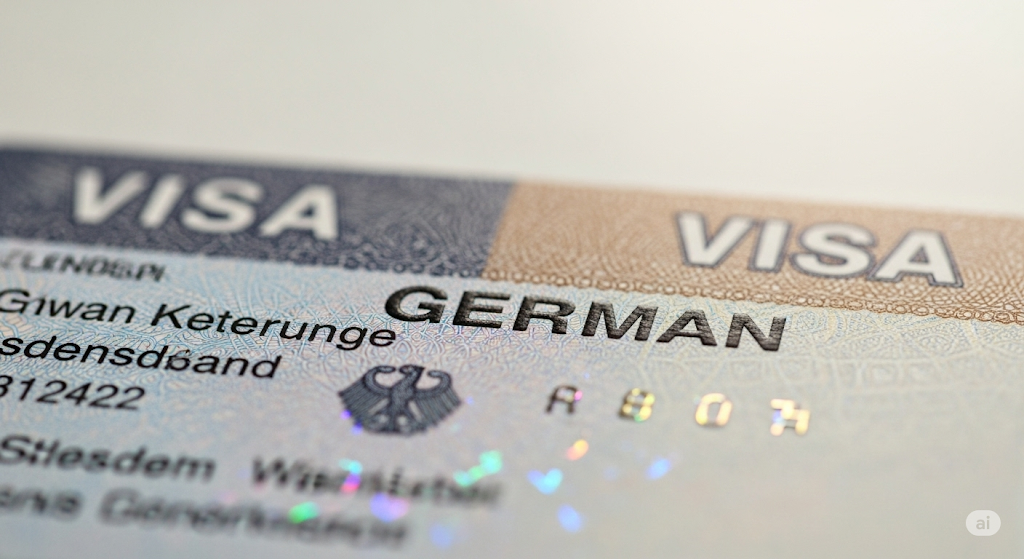
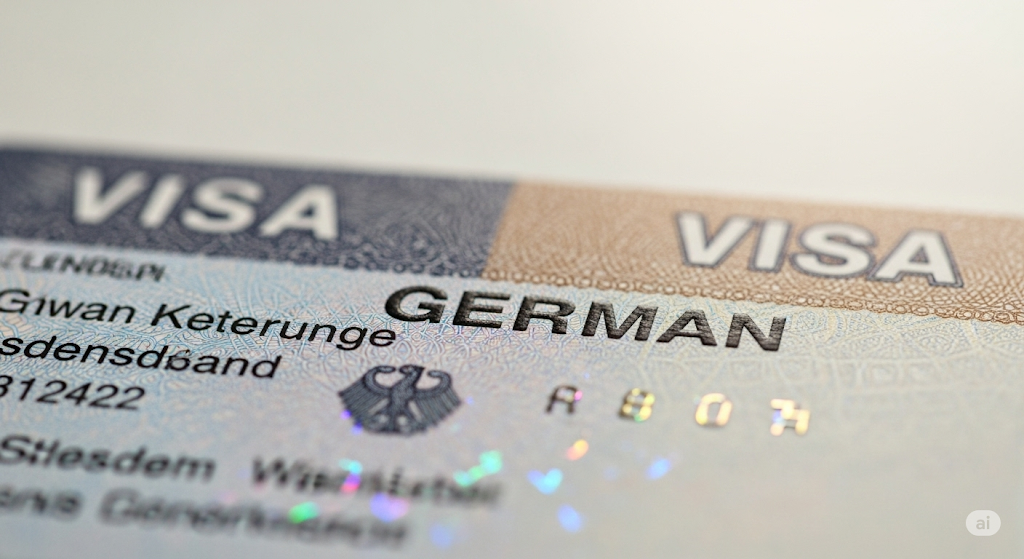
If the athlete is a non-EU national, they usually need to apply for a national visa (type D) at the German embassy or consulate in their country of residence, explicitly referring to § 22 (1a) AufenthG.
All supporting documents must be submitted with the visa application, in particular:
-
the contract (or draft contract) with the German club
-
the professional sports CV
-
the invitation or statement from the club / federation
-
proof of health insurance and financial security
What rights does this residence permit grant?
-
Right to perform the agreed sporting activity
The athlete is allowed to work as a professional athlete for the club or team specified in the residence title. -
Residence permit usually for one year
or for the duration of the contract, and it can be extended as long as the conditions remain fulfilled. -
Compulsory health insurance
The athlete must have health insurance coverage, either via the club or through statutory or private health insurance. -
Possibility of family reunification
Under the general rules on income and adequate housing, the athlete may bring over a spouse and minor children. -
Long-term perspective
After several years of lawful stay, and if the general requirements are met (secure livelihood, language skills, pension contributions), the athlete may in future qualify for a permanent residence permit (Niederlassungserlaubnis) – then on the basis of the general rules of residence law.
When can the application be refused?
The application is likely to be refused if:
-
the athlete does not qualify as a true professional or the sporting level is not considered sufficiently high
-
the contract is unclear or appears to be primarily commercial without genuine sporting justification
-
the sponsoring club / federation fails to show that the athlete is of significant public sporting interest
-
there are previous violations of immigration or labour law in Germany or the Schengen area
Frequently asked questions (FAQ)
Can the athlete move to another club after entering Germany?
Yes, a transfer is in principle possible. However, the immigration authority (Ausländerbehörde) must be informed, and the residence permit must be amended so that the new club is correctly registered as the employing organisation.
Can this residence permit later be changed to another type of permit?
Yes. It can later be converted, for example:
-
into a residence permit for studies, or
-
into a permit for general employment,
provided that the specific legal requirements (qualification, job offer, secure means of subsistence, etc.) are met.
Are there any tax exemptions for professional athletes?
No.
Professional athletes are subject to the German tax system like any other person earning income. Income from the player contract is taxable in Germany under the general tax rules.
Conclusion
The residence option for professional athletes under § 22 (1a) AufenthG is a flexible, tailor-made legal pathway designed to attract outstanding sporting talent from outside the EU to Germany.
The essential keys are:
a formal offer from a recognised German club or federation, and clear proof of a high professional sporting level. If these requirements are fulfilled and the documentation is carefully prepared, this form of residence can become a gateway to a stable life and career in one of the world’s leading sports nations.
The editorial team of the website makes every effort to provide accurate information based on thorough research and multiple sources. Nevertheless, errors cannot be entirely ruled out and some details may not be fully confirmed or may change over time. Therefore, the contents of these articles should be considered as an initial point of reference; for binding and up-to-date information you should always contact the competent authorities and specialist bodies.