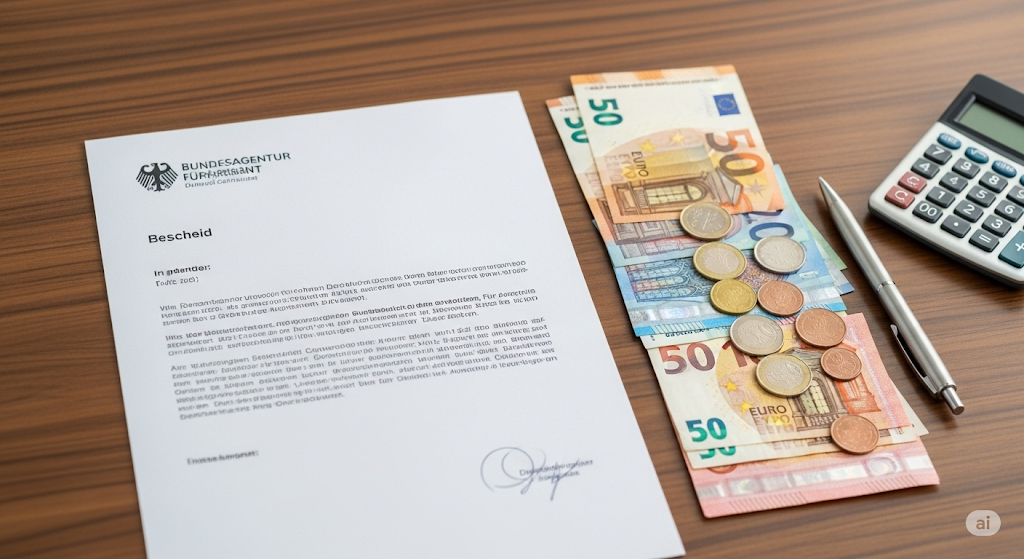
Härtefallhilfe for Self-Employed Workers: A Safety Net in Difficult Times
Härtefallhilfe is an emergency government support scheme provided through the German federal states to help self-employed workers and freelancers when their businesses come under severe financial pressure and they are unable to access or sufficiently benefit from existing aid programmes (such as fixed-cost compensation or energy subsidies) (bmwk.de).
Fully self-employed individuals (solo-self-employed) and freelancers whose primary income (at least 51 %) comes from their self-employed activity (wm.baden-wuerttemberg.de).
They can apply in the federal state or municipality in which their tax-registered business or actual place of work is located.
You may qualify if:
Your business has suffered exceptional losses due to a crisis such as the COVID-19 pandemic or the 2022 energy price crisis,
and you were not eligible for other emergency programmes, or the regular support (e.g. bridging aid or energy support) was insufficient to cover your fixed costs.
The federal state conducts a strict case-by-case assessment using defined criteria to determine whether a genuine economic hardship (Härtefall) exists.
The amount is based on the level of loss and the uncovered fixed costs.
In many programmes, the maximum support amount can be up to €100,000 per business or person over the relevant crisis period (unternehmenswelt.de).
The minimum amount often starts at around €2,000, depending on the number of employees and the fixed-cost burden.
Applications have to be submitted within a limited time window defined by each federal state. For example:
In North Rhine-Westphalia (NRW): up to the end of 2023,
In Bavaria: until 31 October 2023,
In Schleswig-Holstein: until 30 November 2023.
In most states, the application must be filed via a “third party” (Dritter) – for example a tax advisor, lawyer or sworn expert.
The application is submitted electronically to the state investment or development bank or another authorised body (such as the Chamber of Industry and Commerce – IHK), depending on the state.
Proof of income and fixed costs (bank statements, rental contracts and invoices, payroll records).
A written explanation showing that regular aid schemes (e.g. Überbrückungshilfe or energy subsidies) were not sufficient to stabilise the business (bmwk.de).
A confirmation from the third party (tax advisor, etc.) certifying that the information and the described hardship are plausible.
Documents relating to tax registration, tax number and the responsible tax office/federal state.
It grants a financial subsidy based on a realistic assessment of uncovered fixed costs and extraordinary losses.
Payments are made either as a lump-sum grant or in several instalments, depending on the total amount and the state’s implementation rules.
The grants are treated as taxable income, but they are not subject to VAT.
Item
Details
Who benefits?
Self-employed workers and freelancers whose main income comes from their activity, in their respective federal state/region.
Reason / trigger
Crisis-related hardship (pandemic, energy crisis) and insufficient coverage by previous aid.
Who pays?
The federal state, typically via the state development bank or in cooperation with bodies such as the IHK.
Maximum amount
Up to €100,000 per person or company.
Minimum amount
Typically from around €2,000, depending on the level of fixed costs.
How to apply
Via an authorised professional (third party) before the respective application deadline.
Documents required
Evidence of losses, fixed costs, tax data and a formal expert confirmation.
Tax treatment
Grant is subject to income/business tax, but not subject to VAT.
Härtefallhilfe provides a targeted, personalised support mechanism for self-employed workers and freelancers when major crises push them beyond their financial resilience.
It is granted at federal state level after a thorough assessment of documented losses, can reach substantial amounts of up to €100,000, and always requires the involvement of a qualified advisor and timely, complete submission before the applicable deadlines.
The editorial team of this website aims to provide accurate information based on extensive research and multiple sources. However, errors may occur or some information may be incomplete or not finally verified. Please treat the information in this article as an initial reference and always contact the competent authorities and professional advisory services for binding and up-to-date details.