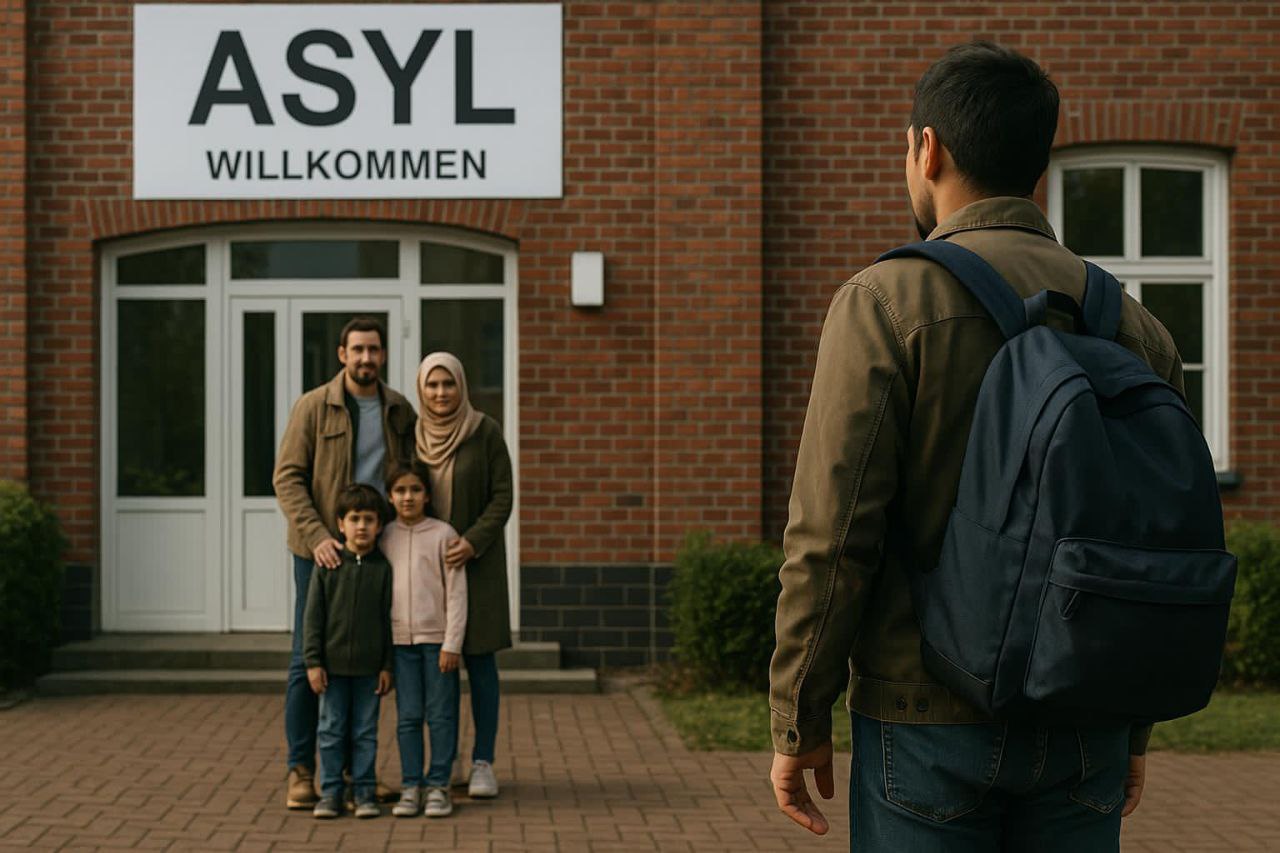
Registering a marriage at the Standesamt for refugees without a passport: laws and procedure
In Germany, a civil marriage (standesamtliche Trauung) is the officially recognized form of marriage. However, when asylum seekers or refugees do not have a passport, many questions arise about whether marriage registration is possible and what legal alternatives exist to prove identity.
In this article, we explain in detail how to register a marriage at the civil registry office (Standesamt) for refugees, which documents are typically required, and how to deal with missing passports or original papers.
Can a refugee without a passport marry in Germany?
Yes, in principle it is possible, but it can be complex and depends mainly on three key factors:
Proving identity in a legally accepted way.
Proving marital status (single, divorced, widowed).
Whether the Standesamt accepts substitute documents or requires a court decision.
Core documents normally required by the Standesamt
In a standard case, the Standesamt requests:
A valid passport or a recognized travel document.
A birth certificate (translated and properly certified/legalized if required).
A certificate of no impediment / single status (often referred to as Ledigkeitsbescheinigung).
A valid residence document (e.g., Aufenthaltstitel, Duldung, or Aufenthaltsgestattung).
Proof of address (Meldebescheinigung).
But what if these documents are not available?
What can you do if there is no passport?
If a refugee does not have a passport, depending on the case, the following options may be considered:
Alternative identity document:
An Ausweisersatz or Identitätsnachweis issued by the competent authority (such as the foreigners’ authority / Ausländerbehörde, sometimes in connection with the case file).
Recognition decision and protection documents:
Where applicable, a recognition decision, protection papers, and the residence permit can support identity clarification.
Applying to the court for an exemption:
A request can be submitted to the competent court to exempt the person from providing documents that are legally or practically impossible to obtain (e.g., due to war or persecution).
Affidavit (eidesstattliche Versicherung):
In some situations, an official sworn statement may be used when original documents are missing—depending on what the Standesamt accepts.
How does the Standesamt handle incomplete documents?
The Standesamt has broad discretion and may refuse to proceed until identity is established beyond doubt. In many cases, applicants are asked to contact their country’s embassy to obtain documents—something many refugees avoid out of concern for their protection status.
Note: Contacting the home-country embassy may, in some cases, be interpreted as a “voluntary re-connection” with the country of origin, which could negatively affect protection status. Legal advice is therefore strongly recommended.
When may some documents be waived?
If a person is recognized as a refugee (for example, residence under § 25(1) AufenthG) or has protection under § 24 AufenthG, authorities often take into account that obtaining a national passport via the embassy may be unreasonable or not feasible.
People with a Duldung due to obstacles to deportation (e.g., missing travel documents) may also be able to pursue a special route to register the marriage.
Practical steps that are recommended
Book an appointment early with the Standesamt in your city and explain your situation in detail.
Bring all available German documents (decisions/letters, status cards, health insurance proof, Meldebescheinigung).
Seek advice from a lawyer specialized in family law and immigration law.
If the Standesamt refuses to proceed, consider court involvement and an exemption request.
Do not contact the embassy without prior legal consultation.
Conclusion
Registering a marriage in Germany for refugees without a passport is legally possible in principle, but it requires a careful process of evidence and justification. Standesamt offices do not automatically reject applications, but they require legally reliable proof of identity and marital status. When original documents are missing, alternatives such as court procedures, substitute documents, or sworn statements may help. The key is to act early and avoid steps that could harm protection status—especially unadvised contact with embassies.
Editorial note
The site’s writers and editors strive to provide accurate information through thorough research and by consulting multiple sources. However, errors may occur or some details may remain unconfirmed. Please treat the content as initial guidance and always consult the competent authorities for officially confirmed information.