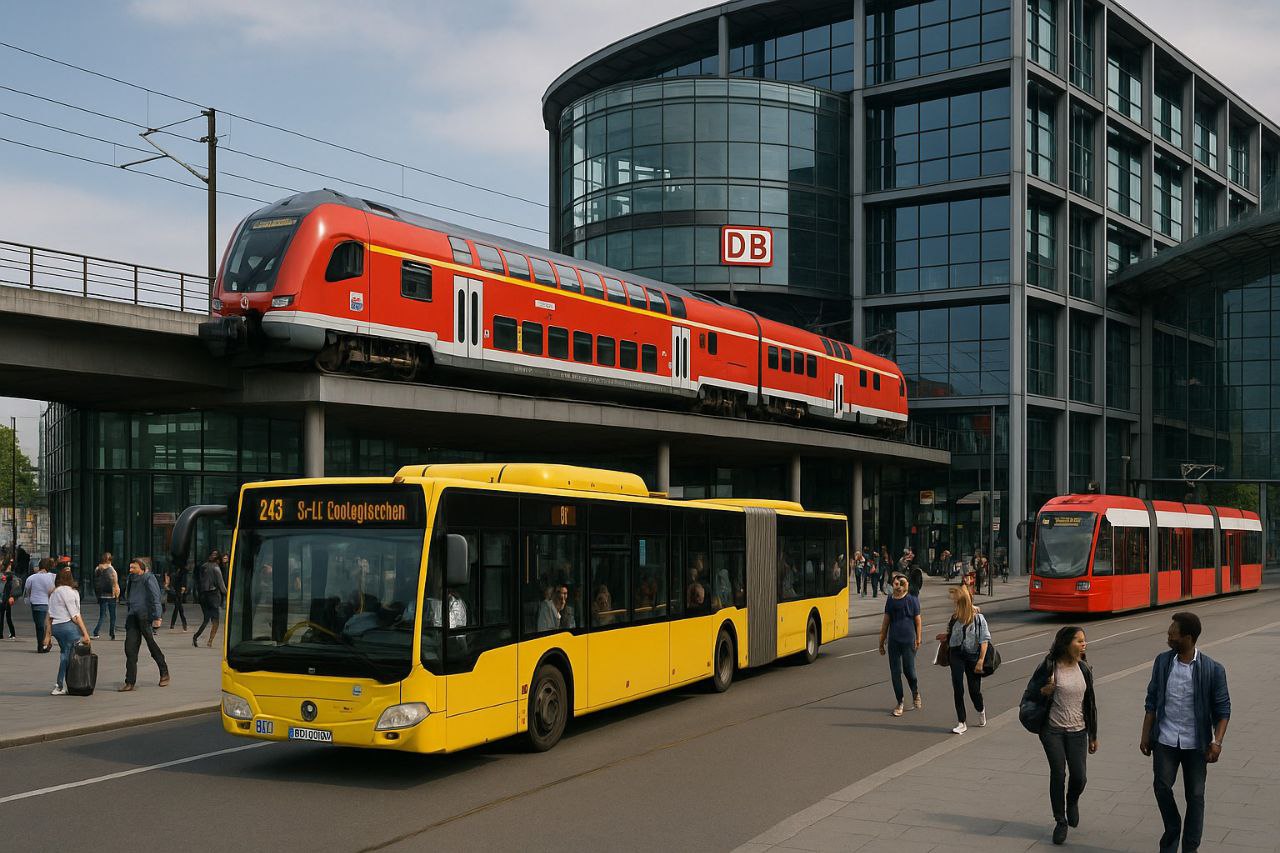
Your Guide to Traveling Safely During Strikes and Understanding Their Impact on Services in Germany
Germany is known for a strong and reliable public transport network. Yet, like any living system, it can be affected by strikes (Streiks) organized by labor unions from time to time. These strikes aim to defend employees’ rights and improve working conditions, but they can also significantly disrupt passenger mobility.
In this guide, we offer practical tips to help you travel safely, reduce inconvenience during strike periods, and understand how services may be affected.
What happens during strikes?
• Reduced trains and buses: Most strikes lead to fewer services, and some lines may be suspended entirely.
• Delays: Departure and arrival times may become irregular or unreliable.
• Severe crowding: Available trains and buses are often packed, increasing delays and making it difficult to find a seat.
How do you know a strike is happening?
Follow the news
Before traveling, check local news and official transport websites such as Deutsche Bahn, or local operators (e.g., BVG in Berlin, MVV in Munich).
Apps and instant alerts
Use transport apps like DB Navigator, VVS, VRR, and others that send real-time alerts about strikes and delays.
Tips for traveling safely during a strike
Plan ahead
If you can postpone your trip, consider choosing another day.
Leave earlier to avoid time pressure.
Use alternative options
Use bicycles (private or public services like Nextbike and Call a Bike).
Consider car-sharing services or official taxis.
Check partially operating lines
During some strikes, certain routes or replacement services (Ersatzverkehr) may run at limited capacity—these can be helpful alternatives.
Share rides
If you work or study, try arranging a carpool (Mitfahrgelegenheit) with colleagues or neighbors.
Your rights during strikes
Compensation
If your train is delayed by more than 60 minutes, you may be entitled to a partial refund—or in some cases a full refund.
In case of cancellations, you can request a refund or use the ticket later.
Keep proof
Keep tickets and receipts, and if possible take a photo of the departure board to support your compensation claim.
Personal safety during overcrowding
Avoid extreme crowds when possible, especially if traveling with children or elderly people.
Watch your belongings—pickpocketing can increase during heavy crowding.
Stay calm and follow staff instructions, even if staff numbers are limited or under pressure.
Conclusion
Strikes are a normal part of professional and social life and may sometimes happen with little notice. However, good planning, calm behavior, and flexibility can greatly reduce their impact.
Stay updated, prepare a backup plan, and remember: respecting others’ rights and prioritizing your safety and the safety of those around you always comes first.
— Our website’s writers and editors strive to provide accurate information through extensive research and consulting multiple sources. However, mistakes may occur or some details may not be fully confirmed. Please treat the information as an initial reference and always consult the relevant authorities for verified guidance.